- The Rideshare Guy
- Posts
- 📰 Weekly Roundup: NYT Exposes Gaps in Uber’s Background Screening Process
📰 Weekly Roundup: NYT Exposes Gaps in Uber’s Background Screening Process
Download Solo to start your 7 day free trial & join the community of over 250K gig workers who are optimizing their time and maximizing their earnings!

Weekly Roundup: NYT Investigation Exposes Gaps in Uber’s Background Screening Process
Happy holidays from The Rideshare Guy! NYT investigation reveals Uber approved drivers with violent felony convictions. Uber and Lyft partner with Baidu to launch robotaxi trials. Former Wall Street trader and RSG contributor urges rideshare drivers to invest in autonomous vehicle trusts as self-driving cars expand. 800,000 California drivers gain union rights in 2026. We break it all down for you.
NYT Investigation Exposes Gaps in Uber’s Background Screening Process

Image source: freestocks.org/Pexels
SOURCE – The New York Times
A New York Times investigation revealed that Uber’s background check system approves drivers with violent felony convictions, including child abuse, assault, and stalking, as long as convictions are at least seven years old in 22 states. Internal documents show executives rejected more thorough screening measures to keep costs down, with Uber paying $7.15 per check for seven-year searches versus $13.80 for complete lifetime checks.
Massachusetts officials banned more than 8,000 drivers, roughly 11 percent, in 2017 when stricter standards were implemented, revealing the scope of drivers with disqualifying records.
Uber’s checks only review criminal records based on residence history for the past seven years in 35 states, meaning crimes committed elsewhere could go undetected.
Lyft maintains lifetime bans for violent felony convictions regardless of timing, though drivers with criminal records have still slipped through its screenings.
Uber and Lyft Partner with Baidu to Launch UK Robotaxi Trials
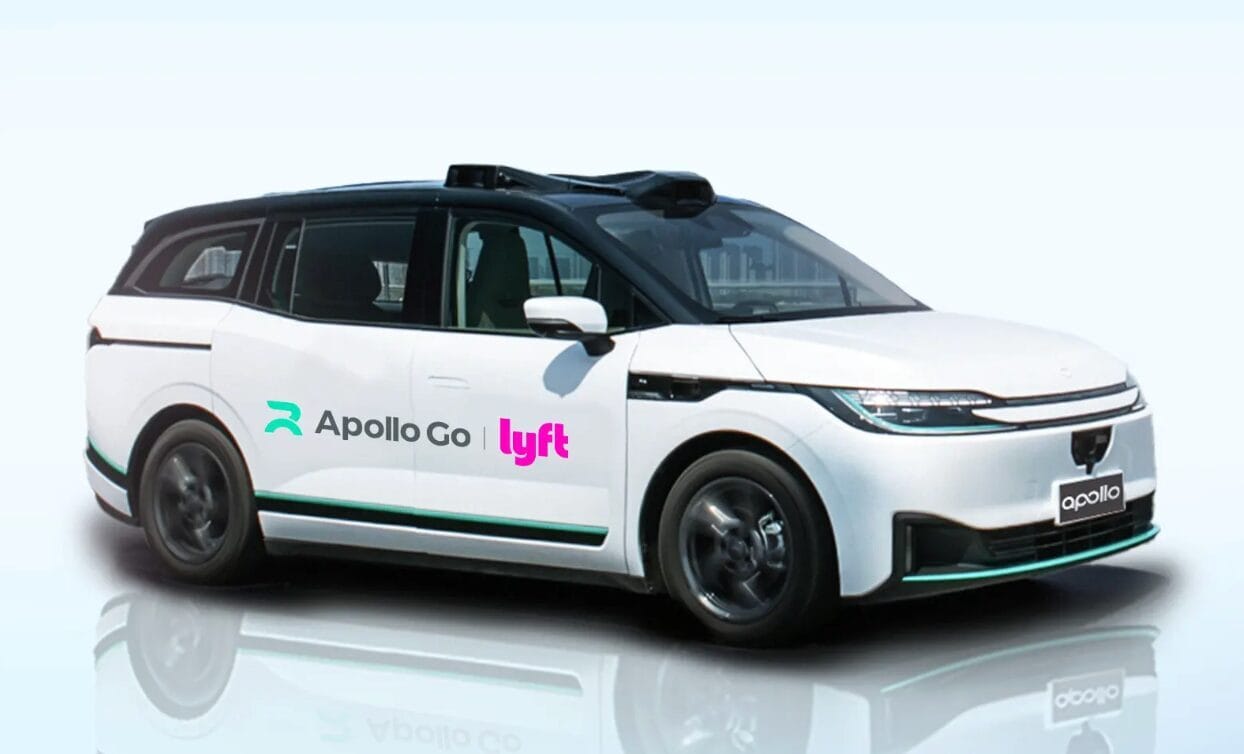
Image source: Lyft newsroom
SOURCE – Reuters
Uber and Lyft are partnering with Chinese tech giant Baidu to deploy driverless taxis in the UK starting in 2026, marking a major expansion into Europe . The partnerships position London as an early proving ground for large-scale robotaxi operations, joining Waymo which began London tests in December 2024 .
Both companies have abandoned in-house autonomous development and now rely on partnerships, with Lyft leveraging its $200 million FreeNow acquisition for access across nine European countries .
While robotaxis promise safer and more cost-efficient rides, profitability remains uncertain as public autonomous companies like Pony.ai and WeRide are still loss-making.
Hybrid networks mixing robotaxis with human drivers may be the most viable model to manage demand peaks and pricing.
Former Wall Street Trader and RSG Contributor Urges Drivers to Invest

Image source: Sergio Avedian
SOURCE – Business Insider
RSG’s very own, Sergio Avedian, was profiled in Business Insider this week about his new project SergioAvedian.com, a platform designed to give financial literacy to gig workers and other everyday people. Avedian advises drivers to complete one extra trip at the end of each shift and invest that money in index funds rather than spending it.
He is exploring creation of an investment trust that would own autonomous vehicles and allow drivers to invest in the robotaxi fleet for passive income.
In 2023, he successfully lobbied California’s treasurer to update Prop 22 reimbursement rates, resulting in Uber paying millions to drivers.
He launched a petition asking Uber and Lyft for a one-time driver bonus, noting Uber announced a $20 billion stock buyback while drivers face economic pressure

Image source: Protest against Uber – Budapest, 2016.01.18 (2), photo by Elekes Andor, licensed under CC BY-SA 4.0 via Wikimedia Commons.
Approximately 800,000 rideshare drivers in California will gain the right to unionize starting January 1, 2026, under Assembly Bill 1340 signed by Governor Newsom. The SEIU has begun organizing efforts at airports and on social media, though the earliest drivers could vote to form a union is May 1, 2026. Uber and Lyft reversed their opposition after lawmakers passed Senate Bill 371, which reduces the companies’ insurance requirements from $1 million to $300,000 per incident.
The law represents a major shift after gig companies spent more than $200 million to pass Proposition 22 in 2020, which classified drivers as independent contractors.
Labor advocates warn the companies agreed to unionization primarily to secure the $700,000 per incident reduction in insurance liability requirements.
QUICK HITS
Uber Eats faces a potential one-month ban in Amsterdam after the country’s Labor Inspectorate accused the platform of knowingly using couriers without valid work permits and misleading government offices for years. – NL Times
Beans, legumes, tinned fish, chicken nuggets, and egg sandwiches were the most ordered items on GrubHub this year. – Fox 13 Seattle
Want to learn more about the robotaxi industry? Subscribe to The Driverless Digest, our new newsletter and podcast dedicated to the future of autonomous vehicles.
Must Listen Or Watch RSG Content
Here are this week’s featured podcast episode and YouTube videos:
Make sure you Subscribe so you don’t miss out on future conversations and interviews!
We, at the Rideshare Guy have created this amazing community of Support! The steering wheel doesn’t define you. You do!

Did someone forward you this newsletter? Subscribe now for free so you never miss an update…
Never miss a Rideshare Guy update…