- The Rideshare Guy
- Posts
- Should Uber and Lyft Pay More To Their Highest-Rated Drivers?
Should Uber and Lyft Pay More To Their Highest-Rated Drivers?
Download Solo to start your 7 day free trial & join the community of over 250K gig workers who are optimizing their time and maximizing their earnings!

Should Uber and Lyft Pay More To Their Highest-Rated Drivers?
— By Sergio Avedian —
The rideshare economy runs on a simple promise: open an app, tap a button, and a driver arrives to take you where you need to go.
Behind that promise is a vast and diverse pool of drivers. Full-timers, part-timers, weekend warriors, students, and retirees whose service quality varies widely. Yet Uber and Lyft generally pay them the same rates regardless of performance.
This raises an important question: Should higher-rated drivers be paid more?
It’s a debate that has gained traction as the platforms push for improved reliability and customer satisfaction. At the same time, drivers argue that the current rating system is one-sided and often punitive.
But when viewed through the lenses of economics, platform incentives, fairness, and customer demand, the case for performance-based compensation deserves serious consideration.
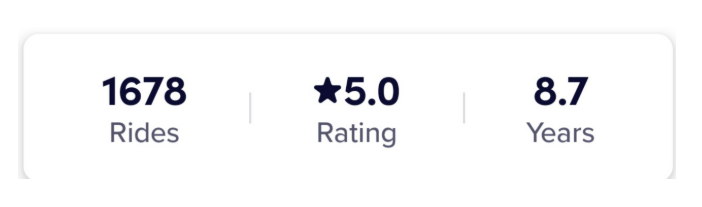
Below are my personal, latest ratings for Uber and Lyft. I predominantly drive and deliver for Uber with over 11.000 trips combined. Lyft is almost an afterthought for me unless they offer a decent incentive for me to accept trip requests!

The Current System: Ratings Without Rewards
Drivers are rated on a 1-to-5-star scale after every trip. These ratings directly affect their status on the platform. Fall below a certain threshold, and you risk deactivation. Stay above 4.9, and you gain… nothing, at least financially.
This creates an imbalanced system. Low ratings can cost a driver their account, but high ratings rarely result in tangible upside. It’s an asymmetry that leaves many drivers frustrated, especially those who consistently deliver exceptional service.
Meanwhile, the companies claim that high ratings already help drivers by giving their accounts “priority,” but most drivers report little real-world impact. The absence of meaningful rewards for excellence raises a basic question of fairness: Why should the best drivers be financially treated the same as those who barely maintain the minimum rating?
The Case for Paying Higher-Rated Drivers More
1. Better Drivers Improve the Marketplace
Higher-rated drivers are typically more experienced, safer, and more reliable. They understand traffic patterns, maintain clean vehicles, communicate professionally, and avoid cancellations. In short, they make the platform better.
If Uber and Lyft want to differentiate themselves from taxis and low-budget competitors, rewarding excellence is logical. A cleaner, safer, more predictable driver pool means higher customer satisfaction, and that drives repeat usage and revenue.
2. It Encourages Professionalism
Right now, many drivers feel there is no reason to go above and beyond. Whether they keep their car spotless, offer water, or drive with precision, the pay is the same. A tiered compensation structure similar to airline loyalty programs would incentivize professionalism.
Imagine “Gold,” “Platinum,” and “Diamond” driver tiers where the very best earn slightly higher per-mile and per-minute rates, or receive bonuses for maintaining a high rating over thousands of trips. That could transform the driver culture from “minimum viable service” to genuine hospitality.
3. It Reduces Supply Issues in High-Demand Periods
Better drivers tend to drive more consistently and are more likely to accept trips during busy times. Offering higher pay could ensure a reliable supply of top drivers during rush hour, airport runs, or event surges, improving the customer experience and reducing wait times.
4. Equity vs. Equality
The gig economy prides itself on meritocracy. Yet, ironically, Uber and Lyft currently treat a 4.95 driver and a 4.65 driver the same until the 4.65 gets deactivated.
Paying the top drivers more reflects a simple truth: not all drivers deliver equal value. It aligns compensation with performance, something every other service-oriented industry embraces.
Arguments Against Paying Higher-Rated Drivers More
To be fair, there are challenges.
1. Ratings Are Imperfect and Often Unfair
Many factors beyond the driver’s control can tank a rating:
Traffic delays
App glitches
Passenger mood
Alcohol-affected riders who hand out low ratings
Riders using ratings as leverage or retaliation
Rewarding pay based on a flawed system could amplify these inequalities, creating frustration and potential bias.
2. It Might Discourage New Drivers
If new drivers start with lower ratings or cannot immediately match the performance of experienced veterans, they could feel disadvantaged. The platform needs a steady flow of new drivers to fill gaps in supply. To address this, any rating-based pay system would need a fair on-ramp, perhaps rewarding consistency over time rather than raw averages.
3. Complex Incentive Programs Cost Money
Uber and Lyft already operate with thin margins. Implementing tiered pay for high performers would require shifting costs likely through slightly higher rider fares, reduced promotions, or smaller bonuses elsewhere. The companies may resist adding another layer of expense when their path to sustained profitability is still evolving.
A Balanced Solution: Performance Tiers with Safeguards
A workable middle ground exists. Uber and Lyft could adopt a model where:
Drivers with consistently high ratings earn a modest bonus or slightly higher per-mile pay
Ratings from obviously biased or problematic riders are automatically filtered out
New drivers get a “grace period” where their pay is not affected
Customer satisfaction surveys supplement ratings to improve fairness
This approach rewards excellence without punishing newcomers or amplifying unfairness in the system.
My Take
Yes, But with Careful Guardrails
On balance, Uber and Lyft should pay more to their best drivers. High-rated drivers deliver more value to riders and to the platforms themselves. They reduce cancellations, improve safety, and elevate the brand. It’s only fair that they are compensated accordingly.
But any such system must recognize that ratings are imperfect and sometimes biased. With safeguards and a thoughtfully designed tier program, Uber and Lyft can reward excellence while maintaining fairness.
The rideshare industry has matured. The next step is clear: align driver compensation with driver quality. It’s good economics, good customer service, and good business for everyone involved.
Email me your comments to [email protected]
Sergio@RSG
Make sure you Subscribe to our blog, podcast, and YouTube channel for the latest discussion, news, strategies, and tips for rideshare and delivery drivers!

Did someone forward you this newsletter? Subscribe now for free so you never miss an update…
Never miss a Rideshare Guy update…