- The Rideshare Guy
- Posts
- How To Stack Rideshare Apps and AI Tools in 2026
How To Stack Rideshare Apps and AI Tools in 2026
🚗💸 Save While You Drive with Ibotta
Gas, snacks, groceries—your daily driving expenses add up fast. With Ibotta, you’ll earn real cash back on the things you already buy.
Get a $5 bonus when you sign up with our code YRUQMTU

The Multi-Screen System: How to Stack Rideshare Apps and AI Tools for Maximum Efficiency in 2026
— By Jay Cradeur —

Single-apping is inefficient.
In 2026, the actual money in rideshare is no longer made by running one app and waiting patiently for pings. It’s made by stacking passenger platforms (Uber and Lyft) and leveraging media, information, and AI tools to turn your car into a mobile command center.
When you have a passenger in the car, it may feel like you’re the only driver that matters in that moment. But that passenger is silently comparing your ride to every other ride they’ve had before.
Cleanliness. Music. Smooth navigation. Conversation. Professionalism. All of it gets measured, consciously or not, and that comparison plays a significant role in whether you earn a tip. Or get Zip. Nada. Nothing.
It may not feel like I’m competing against you as a driver, but I am.
My car is clean. Is yours?
My music is intentional. Is yours?
I’m running both Uber and Lyft to maximize ride options. Are you?
I’m using AI tools to understand my market, my passengers, and the fast-changing world outside my windshield.
Are you staying current, or are you reacting?
This article breaks down how I use one of my most valuable business tools, my smartphone, to reduce downtime, improve passenger experience, and increase real hourly earnings.
How To Stack Apps and AI Tools for Maximum Efficiency
Early on, I realized the most significant drain on my dollars per hour wasn’t traffic or low fares. It was inefficiency.
Switching between apps and fumbling with navigation, manually searching for information, and waiting unnecessarily between rides because I didn’t have the next one lined up.
Every minute spent idly was a minute I wasn’t paid. I eventually built a simple multi-app system that facilitated app stacking and gave me immediate access to information, entertainment, and AI tools without distraction.
The result was fewer gaps between rides, smoother conversations, better tips, and higher sustained earnings without driving more extended hours. What follows isn’t tech for tech’s sake. It’s a system designed to remove friction.

1. The Controller Control Device Strategy
The foundation of the entire system is clarity.
Each function has a role. We’ve all come to accept the smartphone as a permanent part of our lives, but most drivers are still using it far below its potential. Times have changed, and they’re changing faster than most people realize. The modern smartphone is powerful enough to serve as a complete command center if it’s used intentionally.
One smartphone can function like a multi-screen system as long as each app has a clearly defined job. I designate one app as my primary in-ride and navigation focus, the active passenger’s platform handling turn-by-turn directions and trip details.
Everything else stays secondary.
In the background, I run my other rideshare app along with Spotify, Podcasts, and AI tools, using controlled notifications and fast app switching to stay aware of what’s coming next without pulling my attention off the road. The goal isn’t complexity. It’s role clarity.
The key is the separation of duties, not more hardware. When apps compete for attention, focus fractures. When roles are clearly defined, cognitive load drops. You’re calmer, faster, and noticeably more professional, both in how you drive and how you interact with passengers.
A high-quality, stable phone mount is essential. Your phone should be positioned so the information is visible at a glance, without cluttering your windshield or requiring excessive head movement. Once set up correctly, the entire system fades into the background. You stop thinking about the phone and start benefiting from it.
2. Seamless App Stacking
The real money in ridesharing comes from the overlap of rides, specifically, the last three to five minutes of your current ride.
The goal is to accept the subsequent request on your secondary app while your current passenger is approaching their drop-off. That small overlap eliminates the dead zone where you’d otherwise be sitting curbside waiting for the next ping.
Over a shift, those delays add up fast. Five minutes here. Seven minutes there. By the end of the day, you’ve lost a full hour of unpaid time. When stacking rides properly, one ride flows directly into the next. You finish a drop-off already knowing where you’re headed, instead of hoping something comes through.
Of course, you need both Uber and Lyft to do this. That predictability stabilizes your hourly rate and reduces frustration. This is especially powerful during busy windows when requests are plentiful but unpredictable. The driver who stacks intelligently wins every time.
3. Integrating AI Tools for Efficiency
AI isn’t about replacing thinking. It’s about offloading friction.
I use two AI tools, Gemini 3 and ChatGPT, for quick, hands-free information retrieval. Simple prompts such as “What are three fun facts about this landmark?” or “What’s the weather forecast for the next hour?” give me conversational and situational awareness without taking my focus off the road.
This allows for five-star conversation value on demand. If a passenger is curious about the area, an event, or even a general topic, I don’t guess or ramble. I provide concise, confident responses.
I have found most people haven’t begun to utilize, for example, Gemini 3, so when I fire it up, ask a question, and get a verbal response, the customer is impressed. You have provided an added and unexpected benefit for your passenger. You stand out, and you are more likely to secure a tip.
AI also helps me maintain “local expert” status. I can quickly summarize local news, traffic conditions, or events that might impact ride demand later that day. It’s good to know about upcoming concerts and sporting events. That knowledge makes conversations smoother and decisions brighter.
The key is restraint. AI stays on the secondary screen. It supports the ride. It never dominates it.
Pro Tip: If you have an iPhone with an action button, you can set up either ChatGPT or Gemini 3 to ask and receive verbal responses. It’s an excellent feature that I use all the time.
4. Leveraging Media for Passenger and Driver
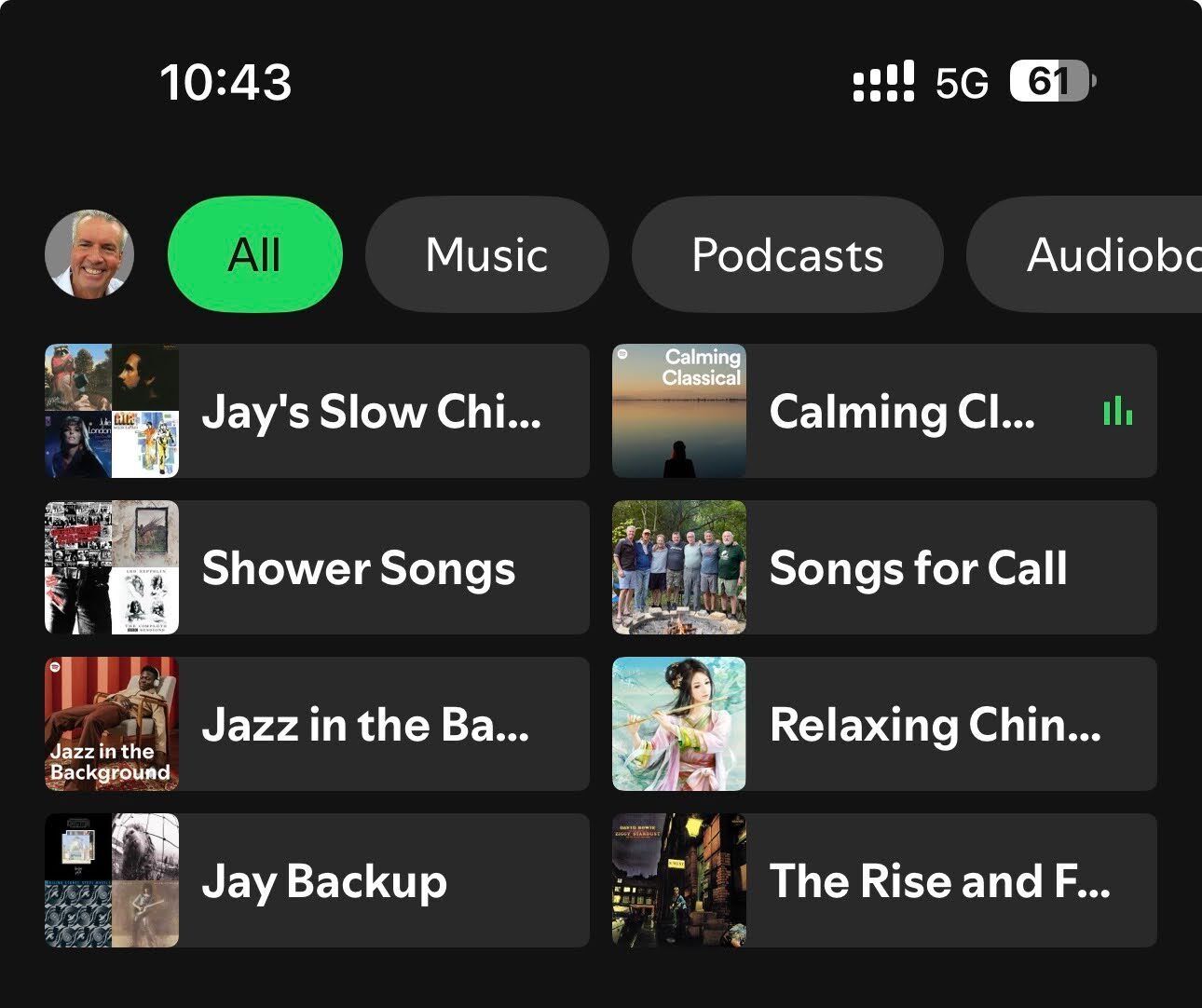
Music selection matters more than most drivers realize. I curate specific Spotify playlists for different ride types. Early mornings get calm, low-energy music. I like the Calming Classical mix very much. Jazz In The Background hits a sweet spot.
Late nights lean upbeat but not intrusive. I have created several of my own playlists, and my favorite is called Jay’s Slow Chill. It works day or night. On rainy days, get something mellow. Each choice subtly improves the cabin experience.
Passengers may not comment on the music, but they feel it. Lately, I have been a passenger on many rides in Los Angeles, Chicago, Michigan, Sacramento, and San Francisco. Some played the right music. Many did not, and instead, a driver talked all over me.
I continue to be surprised by how many drivers think their lives are so interesting that I want to hear every detail. No tip for them! The drivers who gave me a pleasant environment with light banter got my money. The right musical sound reduces tension and increases comfort, which directly affects ratings and tips.
In my downtime between passengers, I use secondary apps like Podcasts or Audible books to learn. Markets. Psychology. Business. Fitness. The goal is never to waste quiet moments scrolling aimlessly. Your car becomes both a revenue engine and a learning environment. Over time, that compounds far beyond rideshare itself.
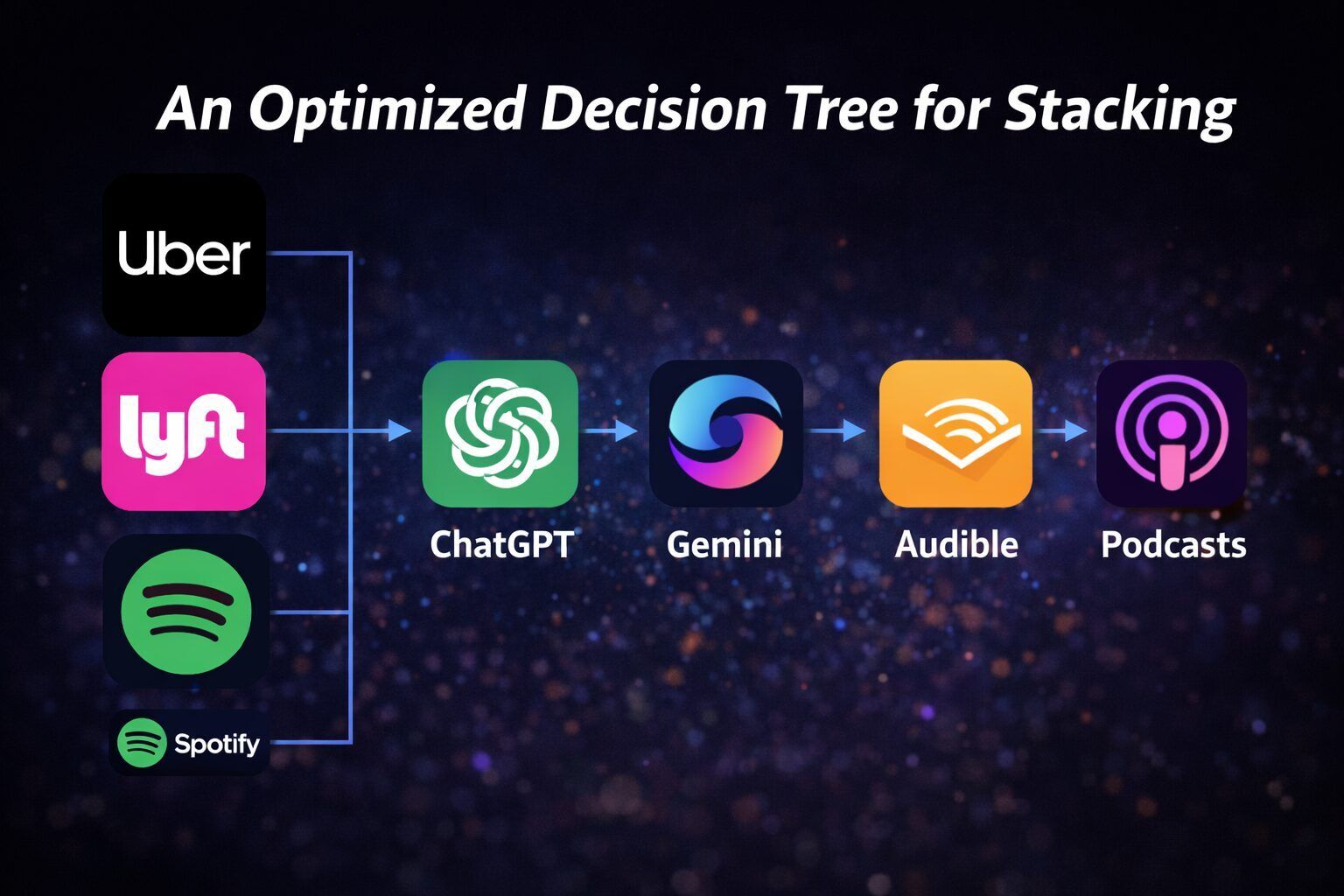
Stacking only works when decisions are consistent. Without a clear framework, multi-app driving quickly becomes chaotic. I operate on a simple, repeatable hierarchy when evaluating incoming requests: highest paying ride first, then securing the next ride, then music for the passenger, and then my own education.
When two offers are comparable, the one with the highest earnings per hour always wins; momentum matters.
Oftentimes, this means accepting the next ride before the current one has ended. It took me a while to feel comfortable doing this. I was feeling guilty that the next passenger would have to wait a few extra minutes.
That’s not reckless behavior; it’s calculated positioning. The objective is to shorten or eliminate downtime without increasing stress, impaired driving, or the risk of accidents. Done correctly, the transition feels seamless rather than hurried, and the passenger experience remains intact.
Key Takeaways
Your car is a business, and you are its CEO.
The real multi-app strategy isn’t just running more apps. It’s using all the information we have at our fingertips, intelligently, so your car is rarely empty, your passenger experience stands out, you continue to learn and grow, and tip opportunities aren’t left on the table.
In 2026, the edge belongs to drivers who reduce friction, control downtime, and treat every decision as part of a larger system.
Stack smart. Learn constantly. And stop driving blind between rides.
Be safe out there.
Make sure you Subscribe to our blog, podcast, and YouTube channel for the latest discussion, news, strategies, and tips for rideshare and delivery drivers!

Did someone forward you this newsletter? Subscribe now for free so you never miss an update…
Never miss a Rideshare Guy update…