- The Rideshare Guy
- Posts
- Gas Relief Efforts by Uber, Lyft & DoorDash
Gas Relief Efforts by Uber, Lyft & DoorDash
Earn Extra Cash Back on Everyday Purchases
Upside is a free cash back app that turns everyday purchases into extra earnings on gas, groceries, and dining at participating locations.
Just open the app, find and claim an offer, pay as usual with your card, and earn cash back on what you’re already buying. You can stack Upside with many credit cards and loyalty rewards, then cash out when you’re ready to your bank or popular gift cards.
✅ Maximize Rewards: Earn extra cash back on things you already need.
✅ Easy & Transparent: It’s simple, with no confusing points, and no minimum to cash out.
✅ Trusted & Proven: Over $1B cash back earned, 5M+ users, 100k+ locations, and top‐rated app reviews.
To see how much you could earn, download the FREE Upside app and use promo code 25RSG to get an extra 25¢ back per gallon on your first tank of gas at participating locations.

Gasoline Prices Skyrocket
Relief Efforts by Uber, Lyft & DoorDash: Meaningful or Symbolic Gesture?
— By Sergio Avedian —
As gasoline prices surge once again, driven by global oil supply disruptions and geopolitical conflict, rideshare and delivery drivers are feeling the financial pressure more than most.
For drivers working on platforms like Uber, Lyft, and DoorDash, fuel is not just a household expense; it is a core cost of doing business. When gas prices spike, take-home earnings can drop dramatically overnight.
In response, all three companies have rolled out gasoline price relief programs aimed at easing the burden. While these initiatives offer some level of support, many drivers and industry observers argue that they fall short of delivering meaningful financial relief.
The Structure of Recent Gas Relief Programs
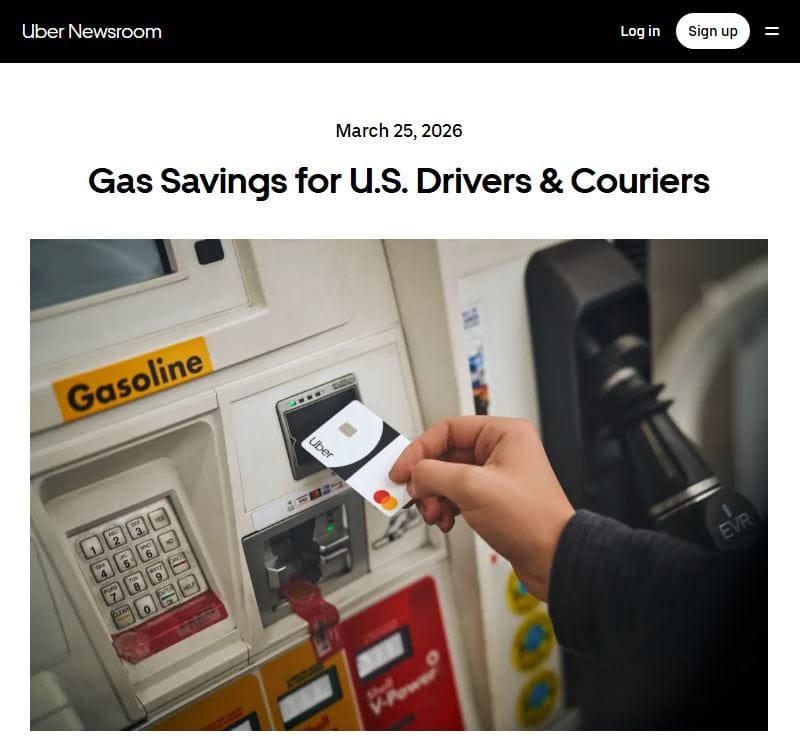
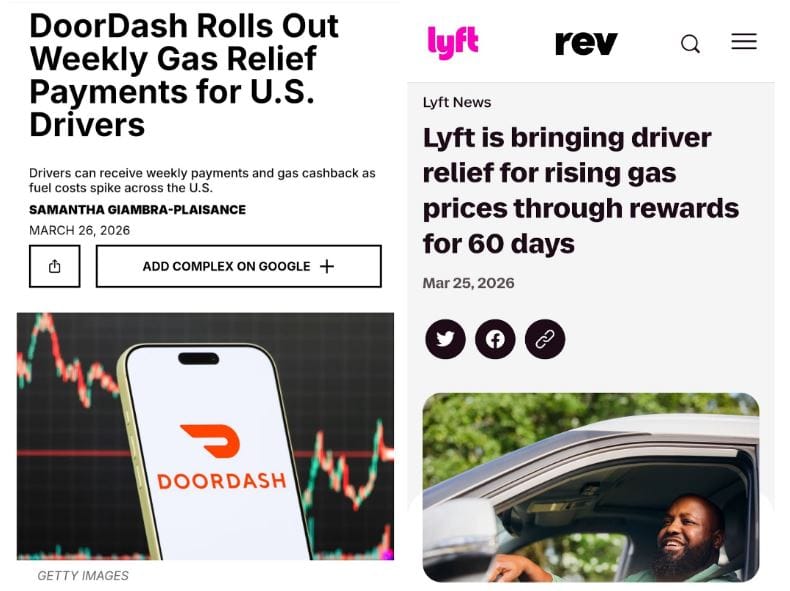
Over the past week, Uber, Lyft, and DoorDash each introduced temporary programs combining fuel discounts, cash-back incentives, and limited direct payments.
DoorDash’s approach includes weekly “relief payments” for drivers who meet mileage thresholds. Drivers who travel at least 125 miles per week can receive between $5 and $15, depending on the distance driven.
Additionally, those using the company’s Crimson debit card receive 10% cash back on fuel purchases. Combined, these benefits can equate to savings of up to roughly $1.90 per gallon under optimal conditions.
Uber’s relief strategy leans more heavily on partnerships and rewards programs. Drivers can access fuel discounts through platforms like Upside and Shell, along with increased cash-back percentages when using the Uber Pro debit card. In some cases, total savings may reach approximately $1.44 per gallon.
Lyft’s program is structured around its Lyft Direct debit card and rewards tiers. Drivers receive between 1% and 2% additional cash back on fuel purchases, depending on their status, layered on top of existing rewards. When combined with partner discounts, Lyft estimates potential savings of up to about $0.94 per gallon for top-tier (Platinum & Elite) drivers.
At first glance, these numbers appear meaningful. However, the real-world impact is far more nuanced.
The Limitations of These Programs
One of the most significant criticisms of these gasoline price relief efforts is that they are highly conditional. In many cases, drivers must use company-issued debit cards to unlock the full benefits. This creates friction, as not all drivers want or are able to switch their banking setup.
Additionally, many of the headline savings figures assume ideal scenarios that may not reflect everyday driving conditions. For example, achieving the highest per-gallon savings often requires stacking multiple programs, maintaining high driver status, or fueling at specific partner stations.
There is also the issue of scale. A weekly payment of $5 to $15 may help offset a portion of fuel costs, but it does little to counteract sustained increases in gas prices that can add hundreds of dollars per month in expenses for full-time drivers.
Importantly, several of these benefits are not entirely new. Many are extensions or temporary boosts of existing rewards programs rather than fundamentally new earnings support. This has led some drivers to view the initiatives as more of a public relations response than a structural solution.
Related Article: What Rideshare Drivers Can Do About High Oil Prices
A Familiar Playbook
This is not the first time gig companies have introduced fuel-related support. During the 2022 gas price spike, Uber and Lyft implemented temporary fuel surcharges typically around $0.45 to $0.55 per ride, with 100% of the proceeds going to drivers.
While those surcharges provided more direct and transparent compensation, they were also short-lived. The current round of relief programs suggests a shift away from customer-funded surcharges toward internal incentives and partnerships.
However, the underlying challenge remains unchanged: drivers are independent contractors responsible for their own operating costs. Unlike traditional employees, they do not receive fuel reimbursements or guaranteed expense coverage.
Real Impact on Driver Behavior
Rising gas prices and the limited nature of relief programs are already influencing driver behavior. Many drivers report becoming more selective about the trips they accept, prioritizing shorter rides, higher fares, or areas with better earning potential.
Some are reducing their hours altogether, while others are exploring alternatives such as electric vehicles, which offer insulation from fuel price volatility. Uber, for example, has previously introduced incentives to encourage EV adoption, signaling a longer-term strategic shift.
These behavioral changes can have ripple effects across the gig economy, including longer wait times for riders, reduced service availability, and increased prices.
Related Article: 9 Best Gas Apps of 2026 (Save Money at the Pump)
What Drivers Can Do
While platform-level relief may be limited, drivers are not without options. Strategies to mitigate fuel costs include:
Optimizing driving hours to focus on peak demand periods
Using fuel discount apps and loyalty programs beyond those offered by gig platforms
Tracking expenses carefully to understand true profitability
Considering hybrid or electric vehicles for long-term savings
Multi-apping to maximize earnings per mile driven
Ultimately, the key is efficiency, earning more revenue per mile while minimizing unnecessary driving.
My Take
Gasoline relief programs from Uber, Lyft, and DoorDash are a step in the right direction, but they are far from a complete solution. While discounts, cash back, and small payments can help at the margins, they do not fundamentally change the economics of gig driving in a high-fuel-cost environment.
For now, the burden remains largely on drivers to adapt. Unless platforms introduce more direct compensation mechanisms such as meaningful per-mile adjustments or permanent surcharges, gas price volatility will continue to pose a major challenge for gig workers.
In the end, these relief efforts highlight a broader truth about the gig economy: flexibility comes with trade-offs, and when costs rise, drivers are often the ones left absorbing the impact
Email me your comments to [email protected]
Sergio@RSG

Did someone forward you this newsletter? Subscribe now for free so you never miss an update…
Never miss a Rideshare Guy update…