- The Rideshare Guy
- Posts
- $30/Hour Secret: My 5 Non-Negotiable Rules After 32,000 Rides
$30/Hour Secret: My 5 Non-Negotiable Rules After 32,000 Rides
Earn extra income by giving your passengers free entertainment with Play Octopus!

$30/Hour Secret: My 5 Non-Negotiable Rules After 32,000 Rides
— By Jay Cradeur —

Uber and Lyft, and their AI Overlords, have created and continue to fine-tune algorithms designed to keep you moving, accept low-revenue rides, and NOT to maximize your profit.
They are intended to serve Uber and Lyft first, the passengers second, and then you and me, the drivers, last. The algorithm will try to get you to bite on crappy, low-paying rides.
Don’t worry. If you don’t take it, someone else will. I used to feel guilty declining so many rides. Not anymore!
After 10 years, I developed an ironclad filter that treats the app less like a boss and more like a suggestion box, guaranteeing I hit my $30 per hour minimum.

5 Non-Negotiable Rules to Reach $30/Hour
I spent my first year taking every ride, thinking volume was key.
The great and wise Sergio Avedian (of the Show Me The Money Club YouTube show) constantly called me an "Ant." I took every ride because they all paid the same when I first started. The first pay structure was a clean 80% of the ride payment. Then Uber and then Lyft switched it up with a time-and-distance calculation.
But here again, all rides paid the same hourly rate. The key was to stay busy. My profits were tremendous. I earned many bonuses based on volume, but all that changed when the rideshare companies introduced algorithmic upfront pricing.
I started logging my true dollars-per-hour (DPH) and realized that I was working harder for less. The data created by my filtering system ensures every acceptance moves me toward my $30/hour target.

1. Profit Per Hour (PPH) Threshold
You must know your number. For me, that number is $30.00 of revenue per active hour. If a ride acceptance will mathematically drop your DPH average below your own threshold, you must decline it.
This is cold business.
The app is not your friend, and it is undoubtedly not calculating your actual profit after gas and depreciation. You must do the calculation yourself. Do not let sentiment, a false sense of loyalty, or a slight nudge from the app sway you.
Your goal is simple: maximize the dollar return for the time spent moving.
This requires calculation. Use the short window between receiving the ping and its disappearance. You have roughly 10 seconds to make the decision. If the displayed payout and time do not support your $30 target, it is an immediate decline.
Do not accept a ride that does not give you the full fare and destination unless the area is surging so high that the decision is irrelevant. Do not guess. You must be certain of the profitability before you touch the screen.
2. End Zone Quality
The drop-off location is as crucial as the pickup location. You must assess the quality of the End Zone before you accept the trip.
Is the destination likely to generate a return ride, or is it a guaranteed dead haul back to your city center?
This is a question of efficiency. Wasted miles are wasted dollars. Wasted time is wasted money.
In Sacramento, I love going to the Amazon warehouse in the morning. This route always provides me with a quick ride after the drop-off. If the drop-off is in a low-density or rural area, you must immediately increase your expected fare for that trip to offset the return.
Getting a huge fare for an hour-long ride only works if you can get a ride back. Otherwise, that great fare gets divided into two, and it is not even acceptable. A long ride to nowhere is an efficient trip for the passenger, but a loss for the driver.

3. Rating Requirement
You must set a minimum passenger rating you will accept. Most passengers have a 5.0. Let’s face it. You have to be a really lousy passenger for a driver to give you a rating below 5.
Therefore, when evaluating a ride, my cutoff is 4.80. This is not about snobbery; it is about risk management. Lower ratings correlate with unreasonable expectations. They correlate with poor in-car behavior. Most importantly, they correlate with wasted time and emotional energy. A low-rated passenger is a financial liability.
Declining a potential low-rater is protecting your car and your mental state. A conflict with a passenger is never worth the fare. It wastes time you could have used for a profitable trip. A lousy passenger can ruin your entire shift if you let it. It creates unnecessary stress.
Stress leads to poor driving decisions. Set your minimum. Stick to it without exception. Your peace of mind contributes directly to your efficiency.

4. Follow Your Anchor Zones
Identify your top three to five "anchor zones."
These are the specific areas in your city with consistently high demand. They are the financial hubs of your operation. Do not get pulled away from them by mediocre pings. Filter your acceptance rules to ensure most rides are moving you toward or within one of these anchor zones.
This requires discipline. In the early morning, one of my anchor zones is the Thunder Valley Casino. There is always someone leaving there who needs a ride.
Resist the urge to chase the surge far outside these zones. The dead miles you drive to reach a surge location will kill your DPH. The surge may vanish before you arrive anyway. The goal is a predictable, reliable income.
Stick to the zones that pay you best. The money is not made in the dramatic chase; it is made in the boring, consistent execution of your strategy within known profitable areas.

5. Time Window Limit
You must know your most profitable working hours.
For me, it is the early morning and light traffic before sunrise, followed by the morning rush to work. I maximize my time in those highest-paying windows. This means you must be extra selective for rides that will take you past the start of the next high-demand period.
Do not accept a 60-minute ride at 9:30 AM if the morning rush usually ends at 10:30 AM. That single ride will cost you three high-paying trips.
Maximize your time in the highest-dollar-per-hour windows, even if it means declining a decent ride. Decent is the enemy of excellent. Every decision must be weighed against its opportunity cost.
Are you accepting a $15 ride that prevents you from earning $45 in the next hour? If so, the ride is unacceptable. You are driving for your profit, not for the profit of Uber and Lyft.
Key Takeaways
The apps always optimize for their bottom line.
You must optimize for yours. The era of taking every ride and expecting your maximum profit is over. You must treat this gig like a competitive business.
My advice for you is two-fold.
First, plan your week. Know exactly when you will work and when you will clean your car. Schedule when you will get gas, eat, and exercise. Structure beats chaos every time.
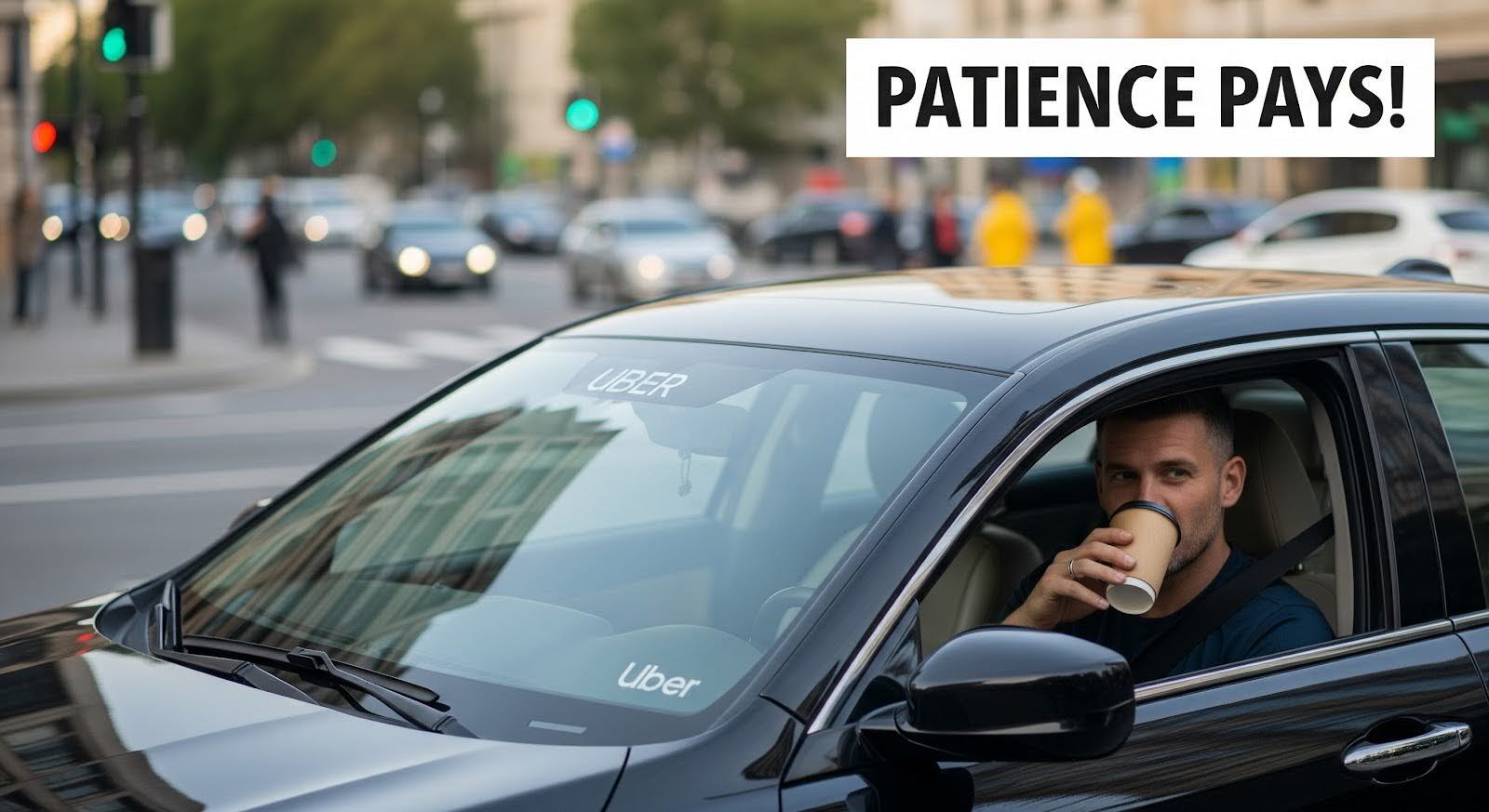
Second, be patient. Do not take every ride.
Only accept the trips that move you toward your goals. Saying "No" to a bad ride is the most critical step in achieving a consistent $30 per hour. Do not let the fear of a low acceptance rate control you. Control your profit.
Drive smart. Be safe out there on the road.
Make sure you Subscribe to our blog, podcast, and YouTube channel for the latest discussion, news, strategies, and tips for rideshare and delivery drivers!

Did someone forward you this newsletter? Subscribe now for free so you never miss an update…
Never miss a Rideshare Guy update…